
Author name: vickychavda2021@gmail.com

Iphone 17
Tech Info

The Ultimate Guide IPhone 17 Series in India: Price, Dates, and Deals

iPhone 17 launch: India pricing of all the models Apple has launched the new iPhone 17 series with four main variants, bringing updates in design, features, and performance over the previous generation. The iPhone 17 offers a brighter 120Hz ProMotion display across all models, new AI-enhanced chips, and camera improvements, with noticeable differences compared to iPhone 16 models in both hardware and pricing. iPhone 17 Variants and Prices iPhone 17: 256GB at ₹82,900, 512GB at ₹1,02,900. iPhone Air: 256GB at ₹1,19,900, 512GB and 1TB options available. iPhone 17 Pro: 256GB at ₹1,34,900, 512GB at ₹1,54,900, 1TB at ₹1,74,900. iPhone 17 Pro Max: 256GB at ₹1,49,900; also available in 512GB, 1TB, and new 2TB variant (up to ₹2,29,900). The lineup is available in colors like Lavender, Mist Blue, Black, White, and Sage. iPhone 17 Key Specifications Display: 6.3-inch Super Retina XDR OLED, 2622×1206 pixels at 120Hz (ProMotion), HDR, up to 3000 nits peak brightness. Processor: A19 Bionic chip (octa-core CPU, 3nm), Apple Neural Engine. RAM/Storage: Up to 12 GB RAM, options: 256GB, 512GB (base model starts at 256GB). Camera: Dual rear (50 MP main + 12 MP ultra wide) / 48 MP Fusion camera (Pro models), 24 MP Center Stage front camera, 4K video support. Battery: ~4190 mAh, fast charging (40W wired, 45W wireless MagSafe), up to 30 hrs video playback. Other Features: iOS v26, Ceramic Shield 2, IP68 water/dust resistance, Wi-Fi 7/8, Bluetooth 6, satellite connectivity, crash detection. Design: Aluminum (iPhone 17, Air) and Titanium (Pro/Air). It’s official! Apple will launch the iPhone 17 at the next #AppleEvent on September 9th at 10 a.m. PDT 🚨 Are you excited? pic.twitter.com/E41ouA8KPn — Apple Hub (@theapplehub) August 26, 2025 iPhone 16 vs iPhone 17: Key Differences Feature iPhone 16 iPhone 17 Display 6.1″ OLED 60Hz 6.3″ ProMotion OLED 120Hz Processor A18 Bionic 3nm A19 Bionic 3nm RAM/Storage 8 GB, up to 512GB Up to 12 GB, up to 512GB Rear Camera 48MP main/12MP ultrawide 48MP main/48MP ultrawide Front Camera 12MP selfie 24MP/18MP Center Stage Battery ~3561 mAh ~4190 mAh Charging 20W (wired) 40W (wired), 45W wireless Special Features Camera Control Button Live Translate, new vapor chamber, AI enhancements Design Aluminum, regular Slimmer bezels, Aluminum/Titanium options Starting Price (IN) ~₹79,900 (128GB) ₹82,900 (256GB) Display: iPhone 17 moves to 120Hz ProMotion (smoother scrolling and visuals). Performance: Upgraded to A19 for improved speed and sustained performance. Camera: Front camera is upgraded; ultrawide gets a boost; better AI image processing. Battery and Charging: iPhone 17 features a larger battery and faster charging. Design and Features: Thinner bezels, improved durability, always-on display, and more AI-powered tools in iOS 26. Apple new phone launch 2025, Booking Date Pre-orders start September 9; India sales begin September 19. IP68 rated, fingerprint-resistant coatings, anti-reflective display, and haptic touch across models. iPhone Air is the thinnest iPhone ever at 5.6mm; Pro/Pro Max offer additional pro camera tools and 2TB storage for the first time. The iPhone 17 lineup sets a significant upgrade in display, speed, and camera technology, justifying a premium over the iPhone 16 family and offering more AI-powered features and durability for 2025.


Reliance AI
Tech Info

Reliance Industries’ Bold Leap into AI and Cloud with “Reliance Intelligence” and Green-Powered Data Centers

Reliance Industries’ Bold Leap into AI and Cloud with “Reliance Intelligence” and Green-Powered Data Centers Reliance Industries Limited (RIL), one of India’s largest conglomerates led by Mukesh Ambani, has announced a transformational leap into artificial intelligence (AI) and cloud computing with the launch of its new AI subsidiary, Reliance Intelligence. This ambitious initiative places Reliance at the forefront of India’s AI revolution, promising “AI everywhere for every Indian.” The announcement was a highlight at RIL’s 2025 Annual General Meeting (AGM), marking a defining moment where the company is pivoting from a traditional oil-and-chemicals giant into a deep-tech powerhouse focused on AI infrastructure, services, and partnerships with global technology leaders such as Google and Meta. The Vision: AI Powered by Green Energy at Gigawatt Scale Reliance Intelligence is not just a new unit but a bold vision to build India’s AI backbone, anchored by the creation of gigawatt-scale, AI-ready data centers in Jamnagar. These data centers will be powered entirely by Reliance’s green energy initiatives, combining clean energy with cutting-edge technology. This aligns with Ambani’s vision to not only embrace the future of AI but also ensure that it is sustainable and energy efficient. The scale envisioned is massive: a planned 1-gigawatt (GW) data center facility, delivering immense computing power for AI inferencing and training applications. According to analysts, the power demands and hardware requirements, such as hundreds of thousands of next-generation AI chips, position Reliance Intelligence as an infrastructure competitor similar to major hyperscalers in the U.S. and globally. Strategic Global Partnerships with Meta and Google To accelerate its AI journey, Reliance has forged crucial partnerships with tech giants Meta and Google. The 70:30 joint venture with Meta aims to build next-generation AI infrastructure, deliver AI services, and foster AI talent within India. Meta contributes expertise through its advanced AI models such as the Llama large language model, while Reliance brings infrastructure and scale. Simultaneously, Reliance and Google Cloud have expanded their strategic collaboration to build a dedicated AI-focused cloud region in Jamnagar. Google Cloud will provide state-of-the-art generative AI compute capabilities, innovative platform services, and a secure integrated AI stack. This partnership enables Reliance to tailor infrastructure supporting India’s fastest-growing retail ecosystem and other sectors, making cutting-edge AI accessible and reliable. Notably, the cloud region will be fully compliant with Google Cloud’s stringent global standards and powered by renewable energy, setting new benchmarks for sustainable and sovereign AI infrastructure in India. Broad AI Ecosystem and Consumer Impact Reliance’s AI ambitions extend well beyond enterprise infrastructure. With its earlier acquisition of Haptik, an AI-driven chatbot and conversational platform, Reliance plans to scale AI solutions that can directly interact with millions of retail consumers across its Jio platform. This ties into a broader strategy to embed AI-enhanced services in Jio’s digital ecosystem, impacting telecommunications, retail, digital services, and energy sectors. Moreover, the introduction of Jio AI Cloud 2.0 is seen as a major step in integrating AI into consumer applications. This platform leverages AI to help users organize and retrieve content using voice commands in multiple Indian languages, automatically categorize essential documents, and create AI-powered media content like reels and promotional videos. These innovations aim to further democratize AI and make it a daily utility for every Indian. AI as the New Growth Engine Comparing the AI thrust to the disruptive impact of Jio’s broadband revolution, Mukesh Ambani declared that artificial intelligence has the potential to become the next major growth driver for Reliance Industries. “Just as Jio promised digital everywhere and for every Indian, Reliance Intelligence promises AI everywhere for every Indian,” Ambani stated. The initiative also complements Reliance’s major green energy projects, such as solar power, battery storage, and green hydrogen production, which supply the clean energy required to power the massive data centers. This integration of AI and green energy is expected to create sustainable and efficient operations, securing Reliance’s leadership in the Indian and global tech ecosystems. Reliance Industries’ AI and cloud push is a potential game-changer for India’s technology landscape. It not only addresses the country’s need for sovereign, large-scale AI infrastructure but also accelerates digital inclusion and innovation. By powering these advances with renewable energy, Reliance sets a model for eco-friendly tech growth. Industry experts anticipate that Reliance Intelligence, backed by strong capital investment and global partnerships, will make India one of the world’s most affordable and fastest-growing AI hubs. It is a critical development at a time when India aims to catch up on AI infrastructure and capabilities with global leaders, fostering startups, enterprises, and public sector organizations with accessible AI-driven tools and services. FAQ What is Reliance Intelligence? Reliance Intelligence is Reliance Industries’ newly launched artificial intelligence subsidiary focused on building India’s AI infrastructure and services at a massive scale, including gigawatt-scale data centers powered by green energy. Where will Reliance’s new AI data centers be located? The new AI-ready data centers will be established in Jamnagar, India, powered entirely by Reliance’s renewable energy projects. What is the scale of Reliance’s AI data center project? Reliance plans to build a gigawatt-scale (1 GW) data center facility, incorporating hundreds of thousands of advanced AI chips to handle massive AI computing workloads. Which global tech companies is Reliance partnering with for its AI initiatives? Reliance has strategic partnerships with Meta and Google. Meta is involved in a joint venture to build AI infrastructure and services, while Google Cloud is collaborating to develop an AI-focused cloud region in Jamnagar. How do the AI and cloud initiatives benefit Indian consumers? Through AI-enabled services embedded in its Jio platform and tools like Jio AI Cloud 2.0, Reliance aims to provide AI-powered voice commands, content organization, AI chatbots, and media creation tools accessible to millions of users in multiple Indian languages. What role does green energy play in Reliance’s AI and cloud plans? All data centers powering Reliance’s AI operations are planned to run on renewable energy from Reliance’s solar, battery storage, and green hydrogen projects, ensuring sustainability at scale. Why is AI seen as important for Reliance’s future

Cheap in India
Tech Info

India’s Semiconductor Drive to Make Nation Self-Reliant

India’s Semiconductor Revolution: Poised to Capture Big Share of $1 Trillion Global Market India’s Increasing Role in the Global Chip Market The world today runs on microchips, those tiny but mighty slices of silicon that power everything from smartphones and cars to cloud servers and AI robots. As the world’s hunger for chips continues to grow, India—already a digital superpower—is rapidly stepping up to become a major player in the global semiconductor industry. Here’s how India is making waves, and what this means for the future of technology. India’s Semiconductor Revolution Until recently, the world’s chip production was dominated by countries like Taiwan, South Korea, the US, Japan, and China. Taiwan’s TSMC leads the pack, making over half of the world’s advanced semiconductors. But geopolitical tensions and disruptions during COVID-19 showed the risks of depending on just a few countries for such a vital technology. India, home to one-sixth of humanity and a booming tech talent pool, decided to seize the opportunity. In 2021, the Indian government launched a bold $10 billion “Semiconductor Mission,” offering subsidies and incentives to start local chip design and manufacturing. Fast-forward to 2025, and the progress is visible: Indian factories are rolling out the first “made-in-India” chips, like the Vikram processor developed by ISRO’s Semiconductor Lab and other private players. The creation of five new chip plants, heavy investments from leading global companies, and the successful hosting of “Semicon India 2025” cement India’s status as a growing hub. International companies like ASML now want to be part of India’s chip story, fueling innovation, employment, and new research across the country. Chips Matter in today’s AI, Tech & Automation Industries Chips are the brains inside every modern gadget. They also enable advances in artificial intelligence, autonomous vehicles, green energy, and medical devices. Having a robust domestic chip ecosystem makes India more self-reliant and able to compete in a high-stakes global industry. Semiconductors weren’t invented by one person, but William Shockley, John Bardeen, and Walter Brattain invented the first working transistor at Bell Labs in 1947, setting the stage for modern chips. India’s Bright Future in Chips By creating its own chips, India is aiming to shorten supply chains, reduce costs, and boost sectors like telecom, automotive, defense, and consumer electronics. The government’s commitment, proven by billions in incentives and collaborative research, is showing results: local start-ups, students, and scientists are entering the global value chain. Experts predict India’s chip market could cross $100 billion by 2030. As the rest of the world takes notice, India is emerging not just as a consumer but as an innovator and producer—clear evidence of its rising influence. India’s growing chip industry is a national priority, not just a business bet. By investing in semiconductors, building local talent, and attracting partners, India is joining the ranks of global tech leaders—and helping ensure more stable, secure, and innovative electronics for the entire world. Reinforcing Hon’ble PM @narendramodi's vision for #IndiaTechade, GoI grants first approval under ₹76K Cr. #SemiconIndiaProgramme to @MicronTech’s $2.75Bn (₹ 22,516 Cr.) Semiconductor facility proposal. pic.twitter.com/Nlxn9KH7dm — India Semiconductor Mission (@SemiconIndia) June 22, 2023 What is the world’s largest chip? The world’s largest chip is the Cerebras Wafer-Scale Engine (WSE), an 8.5-inch square chip built for AI tasks. It features 4 trillion transistors and can outpace traditional chips for large-scale AI work. Which country is no. 1 in semiconductors? Taiwan is the global leader, with Taiwan Semiconductor Manufacturing Company (TSMC) controlling over 60% of worldwide chip output and nearly all advanced chip production. Is India making semiconductors? Yes! As of 2025, India is manufacturing its own chips. Facilities like ISRO’s SCL and new fabrication plants are producing homegrown processors, with massive government support driving the “India Semiconductor Mission”. Which is the most powerful chip? As of 2025, TSMC unveiled the world’s most advanced 2-nanometer microchip. For AI, the Cerebras WSE is the largest, and NVIDIA’s Blackwell Ultra is one of the most powerful for AI workloads. What is the best AI chip? NVIDIA leads the pack with its AI chips, especially the Blackwell series and the edge-focused Jetson AGX Orin, offering record-breaking AI performance. Who is the world’s largest memory chipmaker? In 2025, SK hynix of South Korea overtook Samsung to become the world’s top memory chipmaker, leading in high-bandwidth memory critical for AI processors. Who makes chips for NVIDIA? NVIDIA designs its chips but outsources manufacturing mainly to TSMC in Taiwan, known for its advanced process technology. Who owns Snapdragon? Snapdragon is a brand of mobile processors owned and developed by Qualcomm, a leading US-based semiconductor company. The world’s largest chip is the Cerebras Wafer-Scale Engine (WSE), an 8.5-inch square chip built for AI tasks. It features 4 trillion transistors and can outpace traditional chips for large-scale AI work. Taiwan is the global leader, with Taiwan Semiconductor Manufacturing Company (TSMC) controlling over 60% of worldwide chip output and nearly all advanced chip production. Yes! As of 2025, India is manufacturing its own chips. Facilities like ISRO’s SCL and new fabrication plants are producing homegrown processors, with massive government support driving the “India Semiconductor Mission”. As of 2025, TSMC unveiled the world’s most advanced 2-nanometer microchip. For AI, the Cerebras WSE is the largest, and NVIDIA’s Blackwell Ultra is one of the most powerful for AI workloads. NVIDIA leads the pack with its AI chips, especially the Blackwell series and the edge-focused Jetson AGX Orin, offering record-breaking AI performance. In 2025, SK hynix of South Korea overtook Samsung to become the world’s top memory chipmaker, leading in high-bandwidth memory critical for AI processors. NVIDIA designs its chips but outsources manufacturing mainly to TSMC in Taiwan, known for its advanced process technology. Snapdragon is a brand of mobile processors owned and developed by Qualcomm, a leading US-based semiconductor company.

Make Money Online

Real Ways to Make Money Online Without Investment

Different way to make money online In the digital age, images have immense value. Whether beautiful photographs, unique illustrations, or digital artwork, images can be powerful assets that earn money online. Making money with images online is not only achievable but also offers flexible opportunities for photographers, artists, and creatives alike. Here’s a comprehensive, genuine guide to help you turn your visual creativity into real income. Understanding the Market for Images Online Images are everywhere — websites, social media, advertisements, blogs, and publications all need visuals. This demand creates multiple avenues for earning online from your images: Stock photography sales for businesses and creators seeking photos. Selling digital art prints or unique designs. Offering image licensing for commercial use. Creating content for blogs, tutorials, or social media monetization. Platforms and marketplaces form the backbone for selling and licensing images, connecting creators with potential buyers worldwide. Selling Stock Photos on Online Marketplaces One of the simplest ways to start making money with images is by selling stock photos. Stock photography websites allow photographers to upload their images and earn royalties whenever their photos are downloaded or licensed. Popular platforms include Shutterstock, Adobe Stock, Getty Images/iStock, and Alamy. These sites have millions of customers looking for high-quality photos across diverse categories like nature, business, technology, lifestyle, and more. How it works: Create an account on a stock photo marketplace. Upload your best photos that meet quality and content guidelines. Add relevant titles, descriptions, and tags to help buyers find your images. Earn royalties, usually between 15% and 60%, each time someone licenses your photo. Tips for success: Focus on in-demand categories such as natural landscapes, work environments, and authentic lifestyle shots. Upload consistently to build a large portfolio. Ensure your photos are high-resolution and well-composed. Check each platform’s exclusivity policies to maximize earnings. Sell Digital Art and Prints Online If you create digital art or illustrations, you can sell your work as downloadable products or physical prints. Platforms like Etsy, Society6, and Redbubble allow artists to open storefronts where customers purchase prints, phone cases, T-shirts, and other merchandise featuring your art. How to start: Prepare high-quality image files suitable for printing or digital download. Set up a shop on art marketplaces or use your own website. Promote your products on social media platforms like Instagram or Pinterest. Consider offering custom commissions for personalized art. Benefits: No need to manage inventory if using print-on-demand services. Passive income potential as art sales can continue over time. Build a brand around your unique style and creativity. Image Licensing and Direct Sales In addition to stock sites, you can license your images directly to businesses, publishers, or marketing agencies. Many companies prefer exclusive or personalized licenses, especially for branding campaigns. Ways to sell: Build a professional portfolio website highlighting your best work. Use social media and LinkedIn to network with potential clients. Offer tailored photo shoots or custom designs. Participate in photography or art contests to gain exposure. Many photographers also sell framed or unframed physical prints at local art fairs, galleries, or via online auctions, providing another revenue stream. Creating Educational Content and Tutorials Beyond selling images themselves, sharing your photography or design knowledge can be profitable. Platforms like Tutorial Board and YouTube allow creatives to monetize tutorials and educational content related to image creation, editing, and creative techniques. You can: Publish step-by-step guides with your images illustrating techniques. Create video content or courses teaching photo editing or graphic design. Monetize through ads, sponsorships, or paid subscriptions. This approach builds authority and a following, providing indirect income opportunities alongside image sales. General Tips for Making Money with Images Online Focus on originality and quality: Unique and well-crafted images attract buyers and command higher prices. Understand copyright and licensing: Retain control over how your images are used and protect your work legally. Optimize your image metadata: Properly tag and describe images to improve searchability on stock platforms. Be consistent and patient: Building a profitable image portfolio takes time and effort. Utilize multiple platforms: Don’t rely on a single marketplace; diversify to increase revenue. Making money online with images is a viable and rewarding path for creatives willing to invest time and effort into building their portfolio and marketing their work. Whether through stock photo websites, selling prints, licensing images, or creating educational content, there are multiple avenues to generate income. By focusing on quality, originality, and smart promotion, anyone passionate about images can transform their creativity into a steady online revenue stream.

instagram post size
Digital Marketing

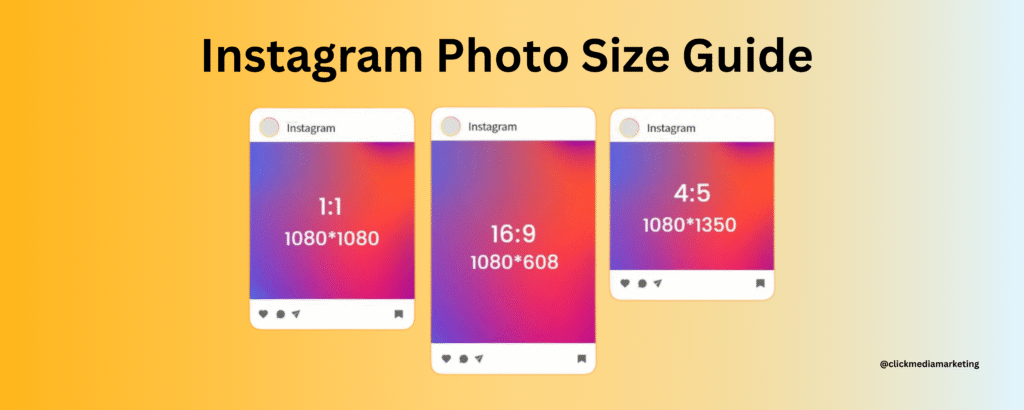
Which Size is best for Instagram post 1080*1080 or 1375*1080

Which size is best for instagram post 1080*1080 or 1375*1080. For Instagram posts, the best size depends on your goal: 1080×1080 (square, 1:1 aspect ratio): Classic Instagram format. Looks uniform on your feed grid. Good if you want your profile grid to look neat and balanced. 1080×1350 (portrait/vertical, 4:5 aspect ratio): Occupies more vertical space on the screen while users scroll—up to 25% more than a square post. More attention-grabbing and often results in higher engagement for feed posts. Instagram recommends this 4:5 ratio for portrait images. Your image will be center-cropped on your profile grid but fully visible in the main feed. 1375×1080 is not a supported Instagram aspect ratio and might get cropped or compressed, resulting in lower image quality or unwanted formatting. Which aspect ratio enhances engagement more on Instagram, square or portrait. The portrait aspect ratio (4:5, e.g., 1080×1350 px) enhances engagement more on Instagram compared to the square aspect ratio (1:1, e.g., 1080×1080 px). This is because portrait posts occupy more vertical space on the screen as users scroll, making them more attention-grabbing and visible, which often leads to higher engagement rates. Instagram itself recommends the 4:5 ratio for feed posts to maximize visibility and impact. In contrast, square posts provide a uniform look for the profile grid but take up less screen space overall, which can result in slightly lower engagement. So, if your goal is to maximize engagement, choose the portrait aspect ratio 4:5 for your Instagram posts. If you prefer a balanced and neat profile grid appearance, go with the square aspect ratio 1:1. How does a 1080×1375 post compare in visibility to 1080×1080 A post sized 1080×1375 pixels on Instagram is very close to the more commonly recommended portrait size of 1080×1350 pixels (aspect ratio 4:5). However, 1080×1375 slightly exceeds the typical height Instagram supports for feed posts. Instagram’s official guidelines and expert sources recommend feed post heights between 566 and 1350 pixels, with the ideal portrait size being 1080×1350 (4:5 ratio). This size maximizes vertical screen space, making your post more visible and engagement-friendly compared to a square 1080×1080 post, which takes up less vertical space. Using 1080×1375 might cause Instagram to crop or resize the post to fit within its supported aspect ratios, potentially affecting image quality or how it appears in the feed and profile grid. The platform prioritizes aspect ratios between 1.91:1 (landscape) and 4:5 (portrait) to avoid cropping. In comparison: 1080×1080 (square, 1:1 ratio): Balanced, uniform look on your profile grid but occupies less screen space in the feed, often resulting in slightly lower visibility and engagement. 1080×1350 (portrait, 4:5 ratio): Takes up about 25% more vertical space in the feed, enhances visibility, and typically drives higher engagement. 1080×1375: Slightly taller than Instagram’s recommended max height for posts; may get cropped or resized by Instagram, which can reduce visibility or affect display quality. Therefore, a 1080×1350 post is preferable to 1080×1375 for optimal visibility and engagement on Instagram, while a 1080×1080 post provides a balanced but less vertically impactful presence. How do user preferences influence choosing between 1080×1080 and 1375×1080. User preferences influence the choice between 1080×1080 (square) and 1375×1080 (portrait-like but not standard) Instagram post sizes mainly based on goals for aesthetics, visibility, and engagement: If users prioritize a balanced and uniform profile grid appearance, they tend to prefer 1080×1080 (square) posts. This size keeps the profile visually neat and consistent when viewed as a whole. If users want to maximize visibility and engagement in the feed, they prefer portrait dimensions. However, 1375×1080 is not a standard Instagram aspect ratio and may be cropped or resized, reducing display quality. The recommended portrait size is 1080×1350 (4:5 aspect ratio) because it takes up more vertical screen space and attracts more attention. Users who prefer an optimal balance between engagement and presentation are advised to choose the 1080×1350 portrait size instead of 1375×1080, since 1375 height is beyond Instagram’s official max and might cause issues.

Digital Marketing

What is SEO?

What is SEO? SEO (Search Engine Optimization) is the process of improving a website’s visibility in the organic search results of search engines like Google and Bing. It involves optimizing website content, structure, and user experience so that search engines can better understand and rank your content for relevant searches. The main objective is to drive qualified, unpaid (organic) traffic to your site by ranking as high as possible on search engine results pages (SERPs). Why is SEO Important Today? SEO remains a crucial digital marketing strategy in 2025 because: Organic search drives the majority of web traffic—much more than paid ads or social media. Appearing at the top of search results increases brand credibility and trust. It helps businesses connect with high-intent customers seeking specific products or information. SEO is cost-effective, providing long-term results and better return on investment than many paid channels. With the rise of AI-powered search and changing algorithms, companies that invest in SEO maintain a significant competitive advantage. SEO Salary (India & Globally) India (2025): Entry-level: ₹3–5 lakh per annum Mid-level: ₹6–10 lakh per annum Senior roles: ₹12–25 lakh per annum, especially in larger companies and enterprises. Global Median Salary (2025): $51,680 (approx. ₹42 lakh/year) US: $66,000 EU: $40,689 Senior roles and Heads of SEO: $75,000–$130,000. Salaries increase with experience, specialization, and taking on strategic roles such as SEO Manager or Head of SEO. Types of SEO SEO consists of several specialized fields, each focusing on different aspects of optimization: Type Description On-Page SEO Optimizing individual pages (content, keywords, HTML) Off-Page SEO Building backlinks and brand reputation externally Technical SEO Ensuring site structure, speed, mobile-friendliness Local SEO Targeting customers in a specific locality E-Commerce SEO Optimizing online stores for product search Video SEO Optimizing video content for search Image SEO Optimizing images for search engines International SEO Targeting multiple countries/languages Voice SEO Optimizing for voice search queries Content SEO Optimizing written content for relevance and depth Key SEO Ranking Factors (2025) Modern SEO involves over 200 ranking factors, but the most important today are: High-Quality Content: Original, helpful, and frequently updated content that satisfies search intent. Backlinks: Quality links from authoritative sites signal trust and boost rankings. Technical SEO: Fast loading times, mobile-friendliness, secure (HTTPS), and no crawl errors. Keyword Optimization: Strategic use of keywords especially in titles, headers, and throughout content. User Experience: Easy site navigation, clear structure, and low bounce rates. Schema Markup: Structured data for better interpretation of content by search engines. Social and Brand Signals: Positive brand mentions and social sharing. Search Intent Match: Content closely matches what users are searching for

Digital Marketing

What is Digital Marketing?

Digital marketing is the practice of promoting products and services using digital channels such as websites, social media, email, search engines, and mobile apps. It utilizes internet-connected devices to create brand awareness, engage audiences, and drive sales, often providing measurable and real-time results unlike traditional print or TV advertising. Top Trends in Digital Marketing (2025) AI Integration & Automation: Artificial intelligence and machine learning are driving personalization, automating campaign strategies, and transforming data analytics. By 2025, AI-driven strategies are expected to account for 75% of marketing activities. Search “Everywhere” Optimization: Brands must optimize not just for Google but also for platforms like YouTube, TikTok, ChatGPT, and app stores, due to changes in how people search—especially Gen Z using social media as search engines. Voice & Visual Search: Voice-based and image-based searches are rapidly growing. Platform Convergence & Omnichannel Marketing: Seamless experiences across multiple digital platforms are key. Social Commerce: Buying and selling directly through social media platforms is booming. Ethical Marketing: Transparency, data privacy, and ethical AI usage are becoming more prominent. Digital Marketing Job Roles & Salary Packages Here are common digital marketing roles in India with their approximate annual salary ranges (as of 2025): Job Role Salary Range (INR/year) SEO Analyst ₹2.5-3.5 lakh Digital Marketing Executive ₹3-4 lakh Content Writer ₹2-3 lakh Social Media Manager ₹3-4.5 lakh Email Marketing Specialist ₹3-4 lakh SEO Manager ₹6-10 lakh Digital Marketing Manager ₹8-12 lakh Content Marketing Manager ₹7-10 lakh PPC/Performance Marketing Lead ₹8-15 lakh Digital Marketing Director ₹15-25 lakh Top packages for experienced professionals and directors in leading companies can exceed ₹20 lakh per annum. Entry-level roles typically start around ₹2-4 lakh per annum, with rapid growth based on skills and specialization. Best Platforms to Learn Digital Marketing Whether you are starting out or want specialized skills, these online learning platforms are highly regarded for digital marketing: Google Digital Garage: Free fundamental and advanced courses with certifications. HubSpot Academy: Comprehensive, industry-endorsed certificates on inbound, content, and email marketing. Coursera: University-affiliated programs, including the Google Digital Marketing & E-Commerce Certificate. LinkedIn Learning: Professional micro-courses with practical skills and industry insights. Great Learning Academy, Alison, edX, Moz Academy, SEMrush Academy, Ahrefs Academy: Offer a variety of free and paid courses on SEO, social media, PPC, analytics, and more. YouTube: Free tutorials and strategy tips from industry experts. WordStream’s PPC University: Focused PPC training and resources. You can start with free courses from Google or HubSpot to build foundational knowledge and move to specialized platforms as you progress.

Scroll to Top